|
||||||||||||||||||||
|
Wednesday, March 22, 2017
Cure&Cancer Forum Call for Abstracts


Thursday, March 16, 2017
DFC Competitive Grants Program: Improving Food and Nutrition Security in LMICs
Deadline: 1 April 2017
The Bill & Melinda Gates Foundation and UK aid from the UK government through the Department for International Development (DFID) are seeking proposals for its 2nd Drivers of Food Choice (DFC) Competitive Grants Program with an aim to improve food and nutrition security in LMIC.
The DFC competitive research grants aim to provide a deep understanding of the drivers of food choice among the poor in South Asia and Sub-Saharan Africa.
Research Topics
- Development of an understanding of factors that influence food choice among consumers in lower wealth quintiles in LMIC to inform policy and practice
- Investigation of how changes to food environments and food systems influence food choice among consumers in LMIC settings.
- Evaluation of the impact of agricultural policies and interventions (e.g., home gardening, aquaculture, livestock production, cash cropping, bio-fortification, agricultural subsidies, land use policies) on food choice behaviors of different household members, especially women and children.
Grant Information
- The DFC Competitive Grants Program anticipates distributing a total of $2,152,500 in the second two-year funding round of the grants program.
- Grant requests may not exceed $300,000 for the total duration of the project.
- Grant requests should be for two-year projects.
- Two-year projects will be awarded but the second year of funding will be contingent upon satisfactory progress by the recipient during the first year.
Eligibility Criteria
- Grants can be awarded to any organization with a demonstrated interest and commitment to improving food and nutrition security in LMIC, including research organizations, non-government organizations, public (e.g., government) institutions, and private sector organizations.
- All recipients must have prior experience conducting relevant nutrition, food systems, or agricultural research, and must demonstrate prior experience in efficient and effective fiscal management. In the case of partnerships, a lead organization should be identified that meets these criteria and can submit the concept memo as the prime applicant.
- All applicants named in the proposal should be described by their roles and responsibilities, as well as the value added by their partnership.
How to Apply
Interested applicants must download the Concept memos template via given website.
Eligible Countries: Afghanistan, Albania, Algeria, American Samoa, Angola, Armenia, Azerbaijan, Bangladesh, Belarus, Belize, Benin, Bhutan, Bolivia, Bosnia and Herzegovina, Botswana, Brazil, Bulgaria, Burkina Faso, Burundi, Cambodia, Cameroon, Cape Verde, Central African Republic, Chad, China, Colombia, Comoros, Congo, Congo, Rep., Costa Rica, Côte d’Ivoire, Cuba, Djibouti, Dominica, Dominican Republic , Ecuador, Egypt, El Salvador, Eritrea, Ethiopia, Fiji, Gabon, Gambia, Georgia, Ghana, Grenada, Guatemala, Guinea, Guinea-Bissau, Guyana, Haiti, Honduras, India, Indonesia, Iran, Iraq, Jamaica, Jordan, Kazakhstan, Kenya, Kiribati, Korea, Kosovo, Kyrgyz Republic, Lao PDR, Lebanon, Lesotho, Liberia, Libya, Macedonia, Madagascar, Malawi, Malaysia, Maldives, Mali, Marshall Islands, Mauritania, Mauritius, Mexico, Micronesia, Moldova, Mongolia, Montenegro. Morocco, Mozambique, Myanmar, Namibia, Nepal, Nicaragua, Niger, Nigeria, Pakistan, Palau, Panama, Papua New Guinea, Paraguay, Peru, Philippines, Romania, Rwanda, Samoa, São Tomé and Principe, Senegal, Serbia, Sierra Leone, Solomon Islands, Somalia, South Africa, South Sudan, Sri Lanka, St. Lucia, St. Vincent and the Grenadines, Sudan, Suriname, Swaziland, Syrian, Tajikistan, Tanzania, Thailand, Timor-Leste, Togo, Tonga, Tunisia, Turkey, Turkmenistan, Tuvalu, Uganda, Ukraine, Uzbekistan, Vanuatu, Vietnam, West Bank and Gaza, Yemen, Zambia, Zimbabwe.
For more information, please visit DFC Competitive Grants Program.
From FundsforNGO
Sunday, December 25, 2016

Wednesday, December 21, 2016
MPH By DISTANCE LEARNING
Muhimbili University of Health and Allied Sciences (MUHAS) will work together with the Open University of Tanzania (OUT) in offering MPH by distance learning programme whereby OUT will provide teaching and learning facilities such as examination rooms and study centers, which are available in all regions of Tanzania. For more information about the course click here
Mwanza Research Methods Course
Highly experienced researchers from the Tanzania National Institute for
Medical Research (NIMR) Mwanza Centre, Mwanza Intervention Trials Unit
(MITU) and the London School of Hygiene & Tropical Medicine (LSHTM)
will conduct this course. For more information click here
Tuesday, December 20, 2016
LHL International Newsletter Christmas 2016

Hello everyone,
LHL international has just released its Newsletter Christmas 2016 Issue. You can read it here
PASADA receives support from Dar Active Cyclists (DAC)
Today (20/12/2016) PASADA has received support from Dar es Salaam Active Cyclists.
This was given by the cyclists as their contribution to neediest in our community.
The support received included 14 children bicycles which were repaired and 10 new bicycles.
The bicycles were received by PASADA's Executive Director Mr. Simon Yohana who was very grateful for the support.
The bicycles will be used by PASADA children as part of play therapy and recreation while at PASADA clinics.


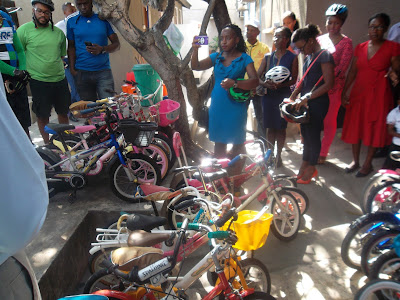
This was given by the cyclists as their contribution to neediest in our community.
The support received included 14 children bicycles which were repaired and 10 new bicycles.
The bicycles were received by PASADA's Executive Director Mr. Simon Yohana who was very grateful for the support.
The bicycles will be used by PASADA children as part of play therapy and recreation while at PASADA clinics.

Dr. Daniel Magesa giving introductory remarks before the handing over of the bicycles

Mr. Mathias Manyanya (2nd from left) from the Dar es Salaam Active Cyclists explaining something to PASADA's Executive Director, Mr. Simon Yohana

Some of the children bicycles which were repaired and new ones donated by the Dar es Salaam Active Cyclists
Friday, December 16, 2016
Wednesday, November 30, 2016
WHO issues new guidance on HIV self-testing ahead of World AIDS Day
From the WHO Website
News release
29 November 2016 | GENEVA - In advance of World AIDS Day, WHO has released new guidelines on HIV self-testing to improve access to and uptake of HIV diagnosis.
According to a new WHO progress report lack of an HIV diagnosis is a major obstacle to implementing the Organization’s recommendation that everyone with HIV should be offered antiretroviral therapy (ART).
The report reveals that more than 18 million people with HIV are currently taking ART, and a similar number is still unable to access treatment, the majority of which are unaware of their HIV positive status. Today, 40% of all people with HIV (over 14 million) remain unaware of their status. Many of these are people at higher risk of HIV infection who often find it difficult to access existing testing services.
"Millions of people with HIV are still missing out on life-saving treatment, which can also prevent HIV transmission to others," said Dr Margaret Chan, WHO Director-General. "HIV self-testing should open the door for many more people to know their HIV status and find out how to get treatment and access prevention services."
HIV self-testing means people can use oral fluid or blood- finger-pricks to discover their status in a private and convenient setting. Results are ready within 20 minutes or less. Those with positive results are advised to seek confirmatory tests at health clinics. WHO recommends they receive information and links to counselling as well as rapid referral to prevention, treatment and care services.
HIV self-testing is a way to reach more people with undiagnosed HIV and represents a step forward to empower individuals, diagnose people earlier before they become sick, bring services closer to where people live, and create demand for HIV testing. This is particularly important for those people facing barriers to accessing existing services.
Between 2005 and 2015 the proportion of people with HIV learning of their status increased from 12% to 60% globally. This increase in HIV testing uptake worldwide has led to more than 80% of all people diagnosed with HIV receiving ART.
Men account for only 30% of people who have tested for HIV. As a result, men with HIV are less likely to be diagnosed and put on antiretroviral treatment and are more likely to die of HIV-related causes than women.
But some women miss out too. Adolescent girls and young women in East and Southern Africa experience infection rates up to eight times higher than among their male peers. Fewer than one in every five girls (15–19 years of age) are aware of their HIV status.
Testing also remains low among "key populations" and their partners - particularly men who have sex with men, sex workers, transgender people, people who inject drugs, and people in prisons - who comprise approximately 44% of the 1.9 million new adult HIV infections that occur each year.
Up to 70 % of partners of people with HIV are also HIV positive. Many of those partners are not currently getting tested. The new WHO guidelines recommend ways to help HIV positive people notify their partners about their status, and also encourage them to get tested.
"By offering HIV self-testing, we can empower people to find out their own HIV status and also to notify their partners and encourage them to get tested as well," said Dr Gottfried Hirnschall, Director of WHO’s Department of HIV. "This should lead to more people knowing their status and being able to act upon it. Self-testing will be particularly relevant for those people who may find it difficult to access testing in clinical settings and might prefer self-testing as their method of choice."
Self-testing has been shown to nearly double the frequency of HIV testing among men who have sex with men, and recent studies in Kenya found that male partners of pregnant women had twice the uptake of HIV testing when offered self-testing compared with standard testing.
Twenty three countries currently have national policies that support HIV self-testing. Many other countries are developing policies, but wide-scale implementation of HIV self-testing remains limited. WHO supports free distribution of HIV self-test kits and other approaches that allow self-test kits to be bought at affordable prices. WHO is also working to reduce costs further to increase access. The new guidance aims to help countries scale up implementation.
WHO is supporting three countries in southern Africa which have started large scale implementation of self-testing through the UNITAID-funded STAR project and many more countries are considering this innovative approach to reaching those who are being left behind.
WHO Department of HIV, Global Hepatitis Programme
Telephone: +41 22 791 1073
Mobile: +41 79 203 3176
Email: namjilsurent@who.int
Gregory Härtl
Coordinator, Department of Communications
Mobile: +41 79 500 6552
Telephone: +41 22 791 4458
Email: hartlg@who.int
News release
29 November 2016 | GENEVA - In advance of World AIDS Day, WHO has released new guidelines on HIV self-testing to improve access to and uptake of HIV diagnosis.
According to a new WHO progress report lack of an HIV diagnosis is a major obstacle to implementing the Organization’s recommendation that everyone with HIV should be offered antiretroviral therapy (ART).
The report reveals that more than 18 million people with HIV are currently taking ART, and a similar number is still unable to access treatment, the majority of which are unaware of their HIV positive status. Today, 40% of all people with HIV (over 14 million) remain unaware of their status. Many of these are people at higher risk of HIV infection who often find it difficult to access existing testing services.
"Millions of people with HIV are still missing out on life-saving treatment, which can also prevent HIV transmission to others," said Dr Margaret Chan, WHO Director-General. "HIV self-testing should open the door for many more people to know their HIV status and find out how to get treatment and access prevention services."
HIV self-testing means people can use oral fluid or blood- finger-pricks to discover their status in a private and convenient setting. Results are ready within 20 minutes or less. Those with positive results are advised to seek confirmatory tests at health clinics. WHO recommends they receive information and links to counselling as well as rapid referral to prevention, treatment and care services.
HIV self-testing is a way to reach more people with undiagnosed HIV and represents a step forward to empower individuals, diagnose people earlier before they become sick, bring services closer to where people live, and create demand for HIV testing. This is particularly important for those people facing barriers to accessing existing services.
Between 2005 and 2015 the proportion of people with HIV learning of their status increased from 12% to 60% globally. This increase in HIV testing uptake worldwide has led to more than 80% of all people diagnosed with HIV receiving ART.
Who misses out on HIV testing?
HIV testing coverage remains low among various population groups. For example, global coverage rates for all HIV testing, prevention, and treatment are lower among men than women.Men account for only 30% of people who have tested for HIV. As a result, men with HIV are less likely to be diagnosed and put on antiretroviral treatment and are more likely to die of HIV-related causes than women.
But some women miss out too. Adolescent girls and young women in East and Southern Africa experience infection rates up to eight times higher than among their male peers. Fewer than one in every five girls (15–19 years of age) are aware of their HIV status.
Testing also remains low among "key populations" and their partners - particularly men who have sex with men, sex workers, transgender people, people who inject drugs, and people in prisons - who comprise approximately 44% of the 1.9 million new adult HIV infections that occur each year.
Up to 70 % of partners of people with HIV are also HIV positive. Many of those partners are not currently getting tested. The new WHO guidelines recommend ways to help HIV positive people notify their partners about their status, and also encourage them to get tested.
"By offering HIV self-testing, we can empower people to find out their own HIV status and also to notify their partners and encourage them to get tested as well," said Dr Gottfried Hirnschall, Director of WHO’s Department of HIV. "This should lead to more people knowing their status and being able to act upon it. Self-testing will be particularly relevant for those people who may find it difficult to access testing in clinical settings and might prefer self-testing as their method of choice."
Self-testing has been shown to nearly double the frequency of HIV testing among men who have sex with men, and recent studies in Kenya found that male partners of pregnant women had twice the uptake of HIV testing when offered self-testing compared with standard testing.
Twenty three countries currently have national policies that support HIV self-testing. Many other countries are developing policies, but wide-scale implementation of HIV self-testing remains limited. WHO supports free distribution of HIV self-test kits and other approaches that allow self-test kits to be bought at affordable prices. WHO is also working to reduce costs further to increase access. The new guidance aims to help countries scale up implementation.
WHO is supporting three countries in southern Africa which have started large scale implementation of self-testing through the UNITAID-funded STAR project and many more countries are considering this innovative approach to reaching those who are being left behind.
For more information please contact:
Tunga NamjilsurenWHO Department of HIV, Global Hepatitis Programme
Telephone: +41 22 791 1073
Mobile: +41 79 203 3176
Email: namjilsurent@who.int
Gregory Härtl
Coordinator, Department of Communications
Mobile: +41 79 500 6552
Telephone: +41 22 791 4458
Email: hartlg@who.int
Monday, November 28, 2016
Violence against women
From WHO Website
Intimate partner and sexual violence against women
Key facts:
- Violence against women - particularly intimate partner violence and sexual violence - are major public health problems and violations of women's human rights.
- Global estimates published by WHO indicate that about 1 in 3 (35%) women worldwide have experienced either physical and/or sexual intimate partner violence or non-partner sexual violence in their lifetime.
- Most of this violence is intimate partner violence. Worldwide, almost one third (30%) of women who have been in a relationship report that they have experienced some form of physical and/or sexual violence by their intimate partner in their lifetime.
- Globally, as many as 38% of murders of women are committed by a male intimate partner.
- Violence can negatively affect women’s physical, mental, sexual and reproductive health, and may increase vulnerability to HIV.
- Factors associated with increased risk of perpetration of violence include low education, child maltreatment or exposure to violence in the family, harmful use of alcohol, attitudes accepting of violence and gender inequality.
- Factors associated with increased risk of experiencing intimate partner and sexual violence include low education, exposure to violence between parents, abuse during childhood, attitudes accepting violence and gender inequality.
- There is evidence from high-income settings that school-based programmes may be effective in preventing relationship violence (or dating violence) among young people.
- In low-income settings, strategies to increase women’s economic and social empowerment, such as microfinance combined with gender equality training and community-based initiatives that address gender inequality and relationship skills, have shown some effectiveness in reducing intimate partner violence.
- Situations of conflict, post conflict and displacement may exacerbate existing violence, such as by intimate partners, and present additional forms of violence against women.
Introduction
The United Nations defines violence against women as "any act of gender-based violence that results in, or is likely to result in, physical, sexual or mental harm or suffering to women, including threats of such acts, coercion or arbitrary deprivation of liberty, whether occurring in public or in private life."Intimate partner violence refers to behaviour by an intimate partner or ex-partner that causes physical, sexual or psychological harm, including physical aggression, sexual coercion, psychological abuse and controlling behaviours.
Sexual violence is "any sexual act, attempt to obtain a sexual act, or other act directed against a person’s sexuality using coercion, by any person regardless of their relationship to the victim, in any setting. It includes rape, defined as the physically forced or otherwise coerced penetration of the vulva or anus with a penis, other body part or object."
Scope of the problem
Population-level surveys based on reports from victims provide the most accurate estimates of the prevalence of intimate partner violence and sexual violence in non-conflict settings. The "WHO Multi-country study on women’s health and domestic violence against women" (2005) in 10 mainly low- and middle-income countries found that, among women aged 15-49:- between 15% of women in Japan and 71% of women in Ethiopia reported physical and/or sexual violence by an intimate partner in their lifetime;
- between 0.3–11.5% of women reported sexual violence by someone other than a partner since the age of 15 years;
- the first sexual experience for many women was reported as forced – 17% of women in rural Tanzania, 24% in rural Peru, and 30% in rural Bangladesh reported that their first sexual experience was forced.
Intimate partner and sexual violence are mostly perpetrated by men against women. Child sexual abuse affects both boys and girls. International studies reveal that approximately 20% of women and 5–10% of men report being victims of sexual violence as children. Violence among young people, including dating violence, is also a major problem.
Risk factors
Factors associated with intimate partner and sexual violence occur at individual, family, community and wider society levels. Some factors are associated with being a perpetrator of violence, some are associated with experiencing violence and some are associated with both.Risk factors for both intimate partner and sexual violence include:
- lower levels of education (perpetration of sexual violence and experience of sexual violence);
- exposure to child maltreatment (perpetration and experience);
- witnessing family violence (perpetration and experience);
- antisocial personality disorder (perpetration);
- harmful use of alcohol (perpetration and experience);
- having multiple partners or suspected by their partners of infidelity (perpetration); and
- attitudes that are accepting of violence and gender inequality (perpetration and experience).
- past history of violence;
- marital discord and dissatisfaction;
- difficulties in communicating between partners.
- beliefs in family honour and sexual purity
- ideologies of male sexual entitlement and
- weak legal sanctions for sexual violence.
Health consequences
Intimate partner and sexual violence have serious short- and long-term physical, mental, sexual and reproductive health problems for survivors and for their children, and lead to high social and economic costs.- Violence against women can have fatal outcomes like homicide or suicide.
- It can lead to injuries, with 42% of women who experience intimate partner violence reporting an injury as a consequence of this violence.
- Intimate partner violence and sexual violence can lead to unintended pregnancies, induced abortions, gynaecological problems, and sexually transmitted infections, including HIV. The 2013 analysis found that women who had been physically or sexually abused were 1.5 times more likely to have a sexually transmitted infection and, in some regions, HIV, compared to women who had not experienced partner violence. They are also twice as likely to have an abortion.
- Intimate partner violence in pregnancy also increases the likelihood of miscarriage, stillbirth, pre-term delivery and low birth weight babies.
- These forms of violence can lead to depression, post-traumatic stress and other anxiety disorders, sleep difficulties, eating disorders, and suicide attempts. The same study found that women who have experienced intimate partner violence were almost twice as likely to experience depression and problem drinking. The rate was even higher for women who had experienced non partner sexual violence.
- Health effects can also include headaches, back pain, abdominal pain, fibromyalgia, gastrointestinal disorders, limited mobility and poor overall health.
- Sexual violence, particularly during childhood, can lead to increased smoking, drug and alcohol misuse, and risky sexual behaviours in later life. It is also associated with perpetration of violence (for males) and being a victim of violence (for females).
Impact on children
- Children who grow up in families where there is violence may suffer a range of behavioural and emotional disturbances. These can also be associated with perpetrating or experiencing violence later in life.
- Intimate partner violence has also been associated with higher rates of infant and child mortality and morbidity (e.g. diarrhoeal disease, malnutrition).
Social and economic costs
The social and economic costs of intimate partner and sexual violence are enormous and have ripple effects throughout society. Women may suffer isolation, inability to work, loss of wages, lack of participation in regular activities and limited ability to care for themselves and their children.Prevention and response
There are a growing number of well-designed studies looking at the effectiveness of prevention and response programmes. More resources are needed to strengthen the prevention of and response to intimate partner and sexual violence, including primary prevention, i.e. stopping it from happening in the first place.Regarding primary prevention, there is some evidence from high-income countries that school-based programmes to prevent violence within dating relationships have shown effectiveness. However, these have yet to be assessed for use in resource-poor settings. Several other primary prevention strategies: those that combine economic empowerment of women with gender equality training; that promote communication and relationship skills within couples and communities; that reduce access to, and harmful use of alcohol; and that change cultural gender norms, have shown some promise but need to be evaluated further.
To achieve lasting change, it is important to enact legislation and develop policies that:
- address discrimination against women;
- promote gender equality;
- support women; and
- help to move towards more peaceful cultural norms.
WHO response
WHO, in collaboration with partners, is:- Building the evidence base on the size and nature of violence against women in different settings and supporting countries' efforts to document and measure this violence and its consequences, including improving the methods for measuring violence against women in the context of SDG monitoring. This is central to understanding the magnitude and nature of the problem at a global level and to initiating action in countries.
- Strengthening research and research capacity to assess interventions to address partner violence.
- Undertaking interventions research to test and identify effective health sector interventions to address violence against women.
- Developing technical guidance for evidence-based intimate partner and sexual violence prevention and for strengthening the health sector responses to such violence.
- Disseminating information and supporting national efforts to advance women's health and rights and the prevention of and response to violence against women.
- Supporting countries’ to strengthen the health sector response to violence against women, including the implementation of WHO tools and guidelines.
- Collaborating with international agencies and organizations to reduce and eliminate violence globally.
Subscribe to:
Posts (Atom)